Personalization
Not a reading.
A reading for Maya
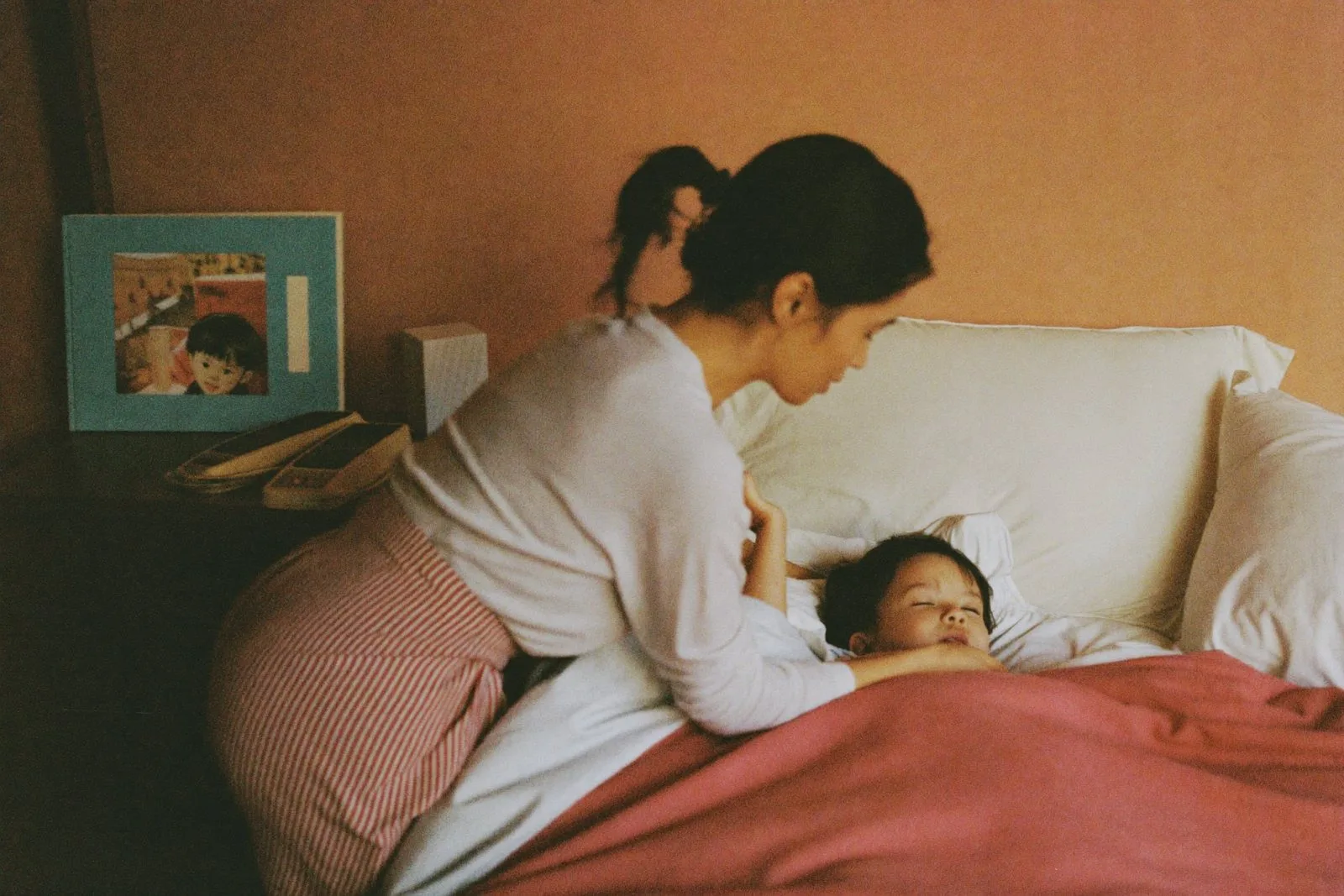
Every recording starts with one question — who is this for? Answer it, and everything you say between the pages becomes hers.
The thing people miss
The same book, recorded twice, exactly the same
It happens all the time — a family records The Gruffalo for Maya, then records it again for Sam, and the two recordings are word-for-word identical. A pity, because the app was asking a different question.
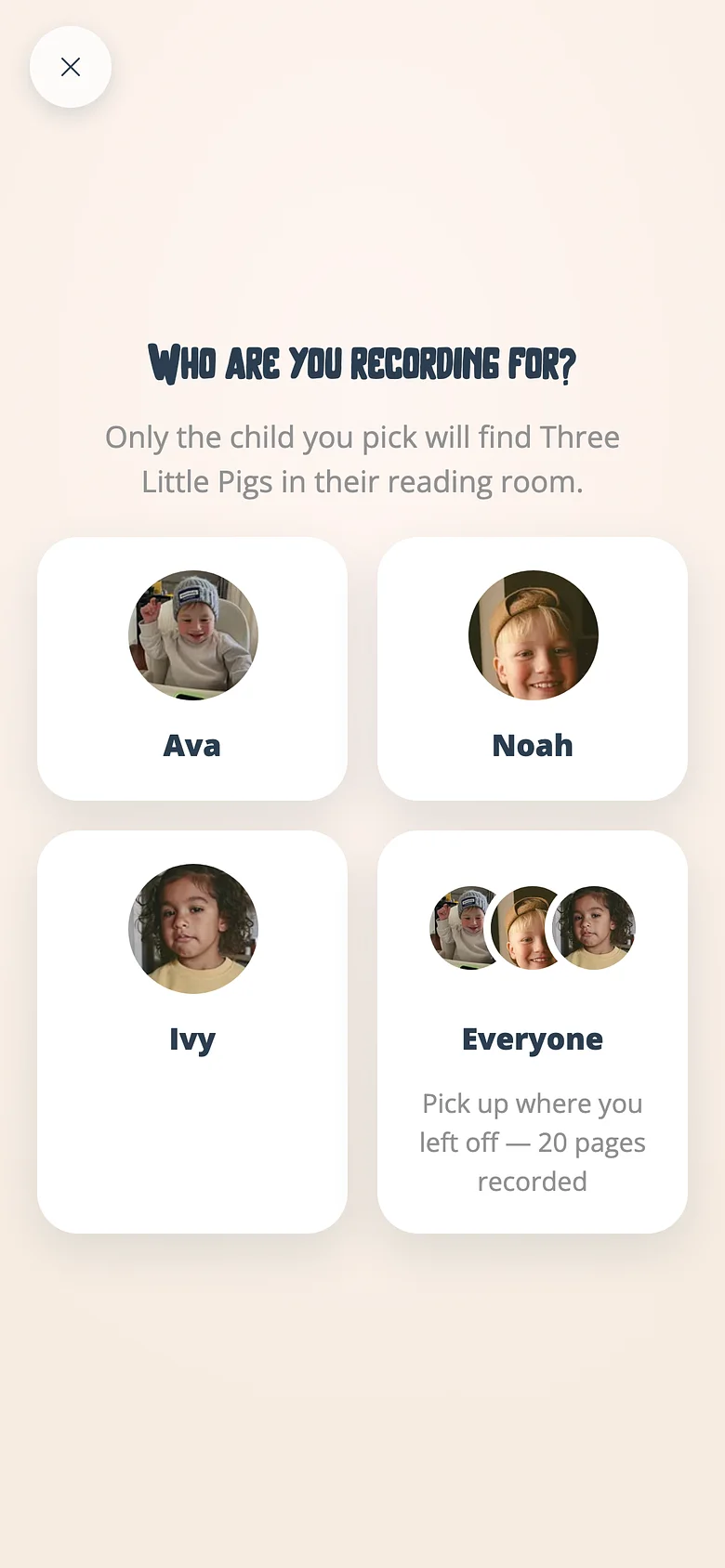
Who are you recording for? is the first screen of every recording. Pick Maya and you're reading to Maya. "Maya, this is the page where you always laugh." "Sam, don't let the mouse fool you." Two books. Two bedtimes. Two children who each got a letter.
What "for Maya" changes
Say anything between the pages
A recording is your voice, not the printed words. Say goodnight in the middle. Explain the hard word. Ask what she thinks happens next.
Her shelf, her voices
A recording for Maya lives on Maya's shelf. When she opens the app as herself, it's the one waiting. Sam's is on his.
The listen comes back to you
The night she listens, you're told — "Maya listened to you read The Gruffalo." From a hotel, that is the whole point.
Or record for everyone
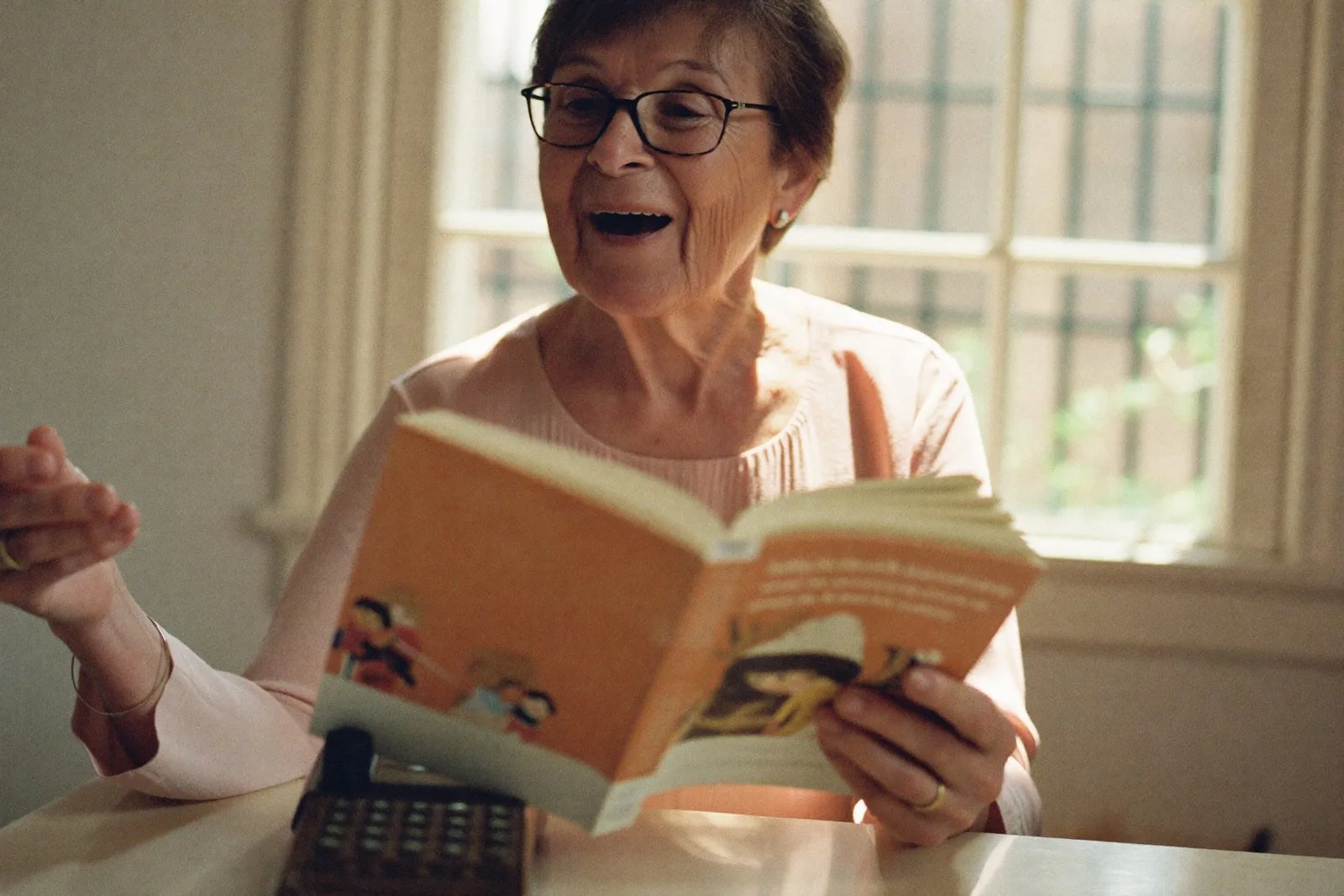
A recording for the whole house is still a good recording. It's the one a grandparent can lend to a second family, too.
Two versions, one book
Mum's version and Grandpa's version sit side by side. The child picks whose voice reads tonight.
Kept forever
Personal recordings are the ones families ask us about years later. They keep playing. That's the Archive Promise.
I recorded the same book for both of them and my son asked why I didn't say his name in his. I hadn't noticed the screen was asking me. Now every one has a little bit just for him.
Say her name tonight
Pick who it's for. Read one page. See what changes.